Thursday, April 28, 2011

Vienna Twilight

Vienna Twilight
Frank Tallis
Random House,  $15.00
ISBN 9780812981001


The Frank Tallis Vienna/Dr. Max Lieberman psychological crime novel series are wonderful and magical - and almost fairy tale like in their sensuous pleasures and depraved and disturbing horrors. In a way they are more about the backstory than the mystery. I think it would not be out of place to suggest Tallis is using the psychological nature of the crimes as a metaphor for the rise of something dark and evil in the subconscious of early twentieth century Vienna. The crimes, often brutal murders of the innocent, offend against all sensibilities. These horrors are juxtaposed against the rise of psychoanalysis and the triumph of the intellect.


At the same time, almost the same mouthful, are the luscious delights of the cafes and concert halls where the Viennese gather to enjoy authentic sounding chocolate cream or apricot jam filled confections and rich and exotic coffee drinks along with transporting music of Strauss, Mozart, Bach, and Viennese musicians of all types. There was so much music in the air that laws were passed to outlaw music making after 11 pm.

Cafe Central in Vienna

Another view of Cafe Central
 I must confess part of my own family was part of the life of early twentieth century Jewish Vienna. And when I was young my great aunts told me stories about the charm and glamour of their native city. We were related to nobility and went to balls and parties, they told me. Yet despite the beauty and wonder, they and their sister, my great grandmother Anna, left before World War I, to come to the U.S. And I'm profoundly grateful that they did! Or I might not be here at all. Our relatives who left Vienna in the 30s barely escaped with their lives. This series helps me to understand the ambiguity of the pre-WWI era for Jews and for others filling the city like Russians, Slavs, and gypsies.But Vienna is incredibly beautiful as you can see from some of these pictures and I hope to visit one day.

The latest, Vienna Twilight, does not disappoint. The murders are indeed gruesome and the motive psychologically obscure and dark. Clothes and couture, the lives of poor laundresses, musicians, and whores, and aspects of the dark underpinnings of Viennese society are explored. It seems well-researched and authentic and there is great deal of rich detail. One pleasure is how the odd relationship between Max and the English medical student Amelia Lydgate continues to evolve and it is both amusing and touching. But Tallis is not rushing into anything; it seems clear he has more ground to cover with these characters and this series.

Natural History Museum in Vienna

I am looking forward to the next one.

Saturday, April 23, 2011

Agatha Christie

I recently bought an IPad, in part as an e-reader. My local library has a limited supply of e-books and I began to re-read some of the hoary Agatha Christies I read years ago to try it out. The IPad is a great tool for reading and for updating this blog - although I have trouble adding pix and will have to learn more about that. As I mentioned in my first blog in January 2010, http://hitormystery.blogspot.com/2010/01/classics.html, Agatha Christie's A Mirror Cracked... was the first adult mystery novel I ever read (I did read Nancy Drew with my  pals), in the 1970s at age 12 or 13. I found them soothing and a balm to the day's troubles.

Old fashioned reads  for a young girl, but I read them all. And loved them. Having read a lot more over the years, I get their shortcomings but they still are incredibly charming. And sometimes Agatha had a thing or two going on in her head.  I read Bertram's Hotel and While the Light Lasts, a neat collection of her short stories. I will re-read a bunch more especially some of my favorites: Man in a Brown Suit, Murder In Mesopotamia, Toward Zero, Death on the Blue Train,  Passenger to Frankfurt, Death Comes as the End, the Tommy and Tuppence stories, and many other old friends. They are still a sweet read.

Thursday, April 21, 2011

Mad, bad, and...

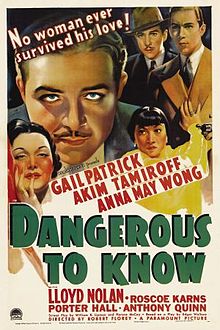
...Dangerous to Know. Lady Caroline Lamb's famous characterization of Lord Byron has been used a number of times for previous novels and movies like the classic potboiler depicted to the left, a recent novel by Barbara Taylor Bradford, quotes about various people, an album by Hillary Duff, a memorable song in an episode of Angelina Ballerina, biographies of Byron, and so on.... I really foresee Byron will be reborn as a detective soon if he hasn't been already. He did figure large in a recent Stephanie Barron- Jane Austin novel.

Anyway... that is the title of the latest Tasha Alexander http://www.tashaalexander.com/index.html Lady Emily mystery. I loved this series when it started. Alexander is doing something wonderful and fresh with this series in dealing with the mores and lives of Victorian woman intellectuals or those who crave the intellectual life. The first few:  Only to Deceive, A Poisoned Season were brilliant and wonderfully exciting in a lot of ways but I didn't much care for the last one,Tears of Pearl, as I detailed in a previous blog:
http://hitormystery.blogspot.com/2010/01/tears-ofboredom.html.
But I had high hopes for this one.


I did like it, mostly, but did think that it dragged. And once again was light on charm. Emily is again divorced from her English society milieu and friends like Ivy, even her judgmental mother. A bunch of stuff didn't make much sense and Emily does seem both whiny and self-righteous. Her husband Colin keeps saying she's brilliant, which is good, since that's the only way you'd know. That's before he cracks down and doesn't want her to do anything. And his mother, an imperious suffragette shows up and hates Emily. Nobody is very understanding of poor post-Pearl injured Emily and it seemed to take a long time to slog through it all.

One annoying things is the frequent use of the word "beyond" - as in "beyond terrifying," "beyond boring," and so on. It's set in France but little seems French or like France. I guess they all speak so fluently that there is no problem with going back and forth between languages without any acknowledgment. Monet shows up as character to move along the plot but he and his wife don't really come alive as characters not does their famous garden get much attention. Sebastian the thief (the apparant inspiration for Arsene Lupin) and Cecile are a bit amusing but their devotion to Emily seems unwarranted - even strained. The food sounds good (a pear wrapped in pastry sounds really divine) but the setting really lacks the feeling, flavor, and sense of being in France in the late nineteenth century or any other time.

Monet's house in Giverny that Emily visits

I was glad to finally finish it - it seemed take forever but I have to admit the unraveling of whodunit was clever and I never guessed who - at least partly 'cause I didn't care!

It's hard to keep a series fresh and Tasha Alexander is doing a good job of scouting out new locations and there are hints of gender politics and maybe domestic trials to come. I'm sure to read the next one.

Sunday, April 17, 2011

Girl in a Green Raincoat

I read Girl... as a galley from the publisher downloaded to my new IPad. There is something insubstantial about an ebook. No weight or heft or smell of the pages. No sense of closure when you close the book - and no trip back to the library or space to find on our crowded book shelves! As a devotee of books and libraries full of books I wasn't sure how I would feel about ebooks but reading on the iPad is a very pleasant experience. I still have regular books to read including the latest Tasha Alexander but the iPad is cool for reading in bed with the lights out, when the power goes out, traveling, spur of the moment reads, and for updating this blog. 

Girl, originally serialized in the New York Times, is a really enjoyable read. I usually enjoy Laura Lippman's moody but amusing books: http://www.lauralippman.com/


In this one, the redoubtable Tess Monaghan is on bed rest while pregnant. And I don't have to tell you what a bad patient she is. It has a Rear Window, Nero Wolfe, or Lincoln Rhyme kind of feeling -the shut in who sits and thinks (while longing for the weekly shower) and people come to her. The title character, the "girl" is, of course, not at all the person she seems to be or that Tess' fevered cogitation conjures. Crow and Whitney are along but no appearance by gorgeous Aunt Kitty or Uncle Spike or other eccentric friends we've come to appreciate. The plot was fun and moved along, the dialogue pretty snappy - I especially enjoyed the scene when Whitney was purse shopping - and Tess and Crow have a baby in the end. Fun book and I'm glad to have a new way to read. I'm on board for the next Laura Lippmann as Tess and Crow have all the fun of a new baby.

"Where Tess rows", according to Laura Lippman's blog: www.lauralippman.com

Thursday, April 14, 2011

Discovery of witches

Witches and vampires and daemons, oh my!

I will freely admit to just not feeling it when it comes to the undead. After Buffy is there really anything left to say?

That said, I thought Deborah Harkness' Discovery of Witches started off really well with mysterious books in the Bodleian, atmosphere of Oxford, spooky, medieval, and delightfully musty. I could practically smell the old leather bindings. The first few chapters are great, appealing heroine Diana Bishop- a hereditary witch descended from Salem witches but with attitude, who is trying not to use magic (well it's true she seems a bit smug), a mysterious, spooky back story, cool old manuscript with magical properties, gathering gloom. The atmosphere is pretty nice. Then in my opinion it goes all to hell.

A 1500 year old vampire shows up And the story starts to become so ridiculous I had to stop reading. I don't know if it was the idiot arty "daemons," Diana's irresponsibility for all supernatural creatures (and Oxford is lousy with them -who knew?), the vampire-witch yoga class (yes really!), or the way that ancient vampires can get tenure, academic funding,  and be scientists "since scientists work alone" -(they do? No they don't!) Or that he can still look 30 after a career that spans about 40 years and no one notices. I left before the love story really got going. Frankly I don't get the appeal of the vampire as a love interest ... Just imagine his breath! but that's just me. I've read it gets better as you go along but I'm afraid this one lost me. I'm too ready for the vamp craze to end.

Sunday, December 26, 2010

Royal Flush, Her Royal Spyness

Recently I found this delightfully lighthearted and silly series of Rhys Bowen  mystery novels set in post-WWI period London and Scotland. They feature Lady Georgiana Rannoch, a naive and broke but sharp royal (Queen Victoria's great granddaughter) who is attempting to eke out a living as a house-cleaner, escort, spy for the queen, detective, or whatever comes to hand while avoiding being married off to some disgusting foreign prince by her royal relations. King George V is on the throne and his wife, Queen Mary, is anxious to get her son, David, the Prince of Wales, and future Edward VIII/Duke of Windsor away from a brash Baltimore social climber who at that time, is still married to Mr. Simpson. We all know what happens next.

The settings in London or Castle Rannoch Scotland are amusingly drawn, the dialogue is fresh and sparkling, historical characters like David and Wallis Simpson, as well as the adorable Princess Elizabeth,  are fun to read about.

True, the characters fall closer to caricature and issues like class differences, snobbery, and starvation are presented more as  a kind of joke but it is overall pretty fun stuff. The series explores "Big Weekend" the England between wars themes like Jacqueline Winspear or Charles Todd but in  a very lighthearted way.  I guess it is best defined as a historical cozy. The next in the series, Royal Blood, is coming out soon, and I look forward to reading it.

Sunday, November 28, 2010

Nobodies Album

Carolyn Parkhurst's The Nobodies Album, reviewed in the NYT Review of Books: http://www.nytimes.com/2010/07/11/books/review/Schillinger-t.html?_r=1&ref=books  is not really a mystery.Well, actually, it is about a murder that gets solved during the course of the story. So it is a mystery? A crime novel? There is a crime after all. Carolyn Parkhurst (http://carolynparkhurst.com/site/) is a gifted writer. Her previous novel, The Dogs of Babel, is about communication with dogs and also is about a death that may be a murder.   

Octavia Frost, a best-selling novelist and estranged mother of a rockstar, Milo, is planning to re-write the ends of some of her novels and publish the new endings. The story is told in first person perspective by Octavia,  who is cold and distant and just not too likable. Note that Octavia has her own website: http://octaviafrost.com/index.php and even a blog. Excerpts from her novels and their new endings are included. Her novels are rather funny and since seem to have been pretty bad. Germs of her sad, lonely autobiography as it unfolds are part of these stories. Can you re-write the end of a novel once it is published? Does that destroy the relationship that readers have with a novel?  I can only imagine Anna Karenina having second thoughts or Holden Caulfield deciding to improve his attitude. Anyway, How much of a writer's life is reflected in her writing? How much is therapy and how much is petty self-justification? It is an intriguingly post-modern idea in a time when fans are given the opportunity to pick their own endings - when a novel and its ending could be  evolving, flawed, and temporary and not the final perfect creation the reader in their passive way comes to rely on. What are novels anyway? However, in this case, it doesn't seem so important.

Octavia's son, Milo, is arrested for the murder of his girlfriend and Octavia, to whom Milo has not spoken for 4 years (although she has followed his career in the distant, stalker-like way that social networks and youtube allow), tries to overcome his antipathy toward her,  and helps him with pretty unpredictable results. I am intrigued by the incompetent (or is she?) self-serving narrator and I really enjoyed the dialogue, the characters - particularly Octavia - the others are a little thin, and the novels within the novel. The rock world seems a little incomplete; Parkhurst clearly knows more about the creative acts that result in novel-writing than in rock songs. The older rock star that Milo befriends - a sort of Jimmy Page or Steve Tyler type -  is a pretty weak character but overall it was a fun read that seemed to have a lot going on.


Friday, November 26, 2010

Mystery vacation...

Gryffindor!!!! Down with Slytherin.

Saturday, November 13, 2010

A sampler of mystery reads

This mixed bag includes some books I've read over the last year and have been meaning to blog about...An assortment of historical, cozy, contemporary, and atypical detective novels. All are worth reading and well written.

Abigail Adams Mysteries: Barbara Hamilton Ninth Daughter, Marked Man

Abigail Adams
The Adamses are taking over  our house! We have been watching John Adams the HBO bio-pic based on the David McCullough biography and starring Paul Giamatti as Adams and Laura Linney as Abigail. Never would have thought Adams was such a whiner! Laura Linney's Abigail is almost exactly what you might guess: a steely New England beauty who was John Adams best supporter, critic, and dear friend - a very intelligent woman and perfect housekeeper at a time when people used sand for cleaning, shopped everyday, and had to boil their laundry in lye in giant washtubs. The early episodes are better, well more lively.  Anyway by coincidence, also just finished Ninth Daughter, the first of the series, having first read Marked Man. A fun series set in  pre-revolutionary Boston when the Boston Tea Party, Massacre and all kinds of mayhem leaving to the Rev. are taking place. They are well researched and characters well-drawn; Abigail is an interesting heroine.

Hank Phillippi Ryan Prime Time

I wanted to like this - HPR sent me a nice note and said she would read my blog when I signed up for the 4mysteryreaders listserv, which was really nice.  I read HPR's  prize winning short story On the House and it was excellent. Just not buying Charlotte McNalley, her on camera news reporter for a big city TV station - the plot was taut and the dialogue not un-witty but it didn't grab me. I may read some of the others though, just to see if it gets better.  

Randall Peffer Listen to the Dead 

Set in New Bedford and the cape islands, this is an interesting mix of contemporary and 1960s Carribean drug smuggling. It has a kind of haunting background full of the resonance of the past including the 1980s New Bedford serial killings and other violence. The interaction between quiet low-key harbormaster Corby Church who finds bones on a lighthouse island and Puerto Rican detective Yemanjá Colón, who channels the dead and whose grandmother is a Santeria priestess, is fun and interesting. I have to admit the scenes with the grandmother were not very convincing and seemed an odd kind of comic relief. The mood did swing back forth from kind of haunting to a sort of out of control comedy. It's pretty good. Even so despite all these positive qualities I kind of lost interest half way through and  did not finish but it was so full of good things I may read more of the series. Peffer's a talented writer. http://www.randallpeffer.com/


Elly Griffiths The Crossing Places: A Ruth Galloway Mystery  

Set in the UK in a Norfolk salt marsh full of stone circles and bog bodies and with its main character an overweight archaeologist loner, this would seem so perfect for me that  I had to read it but once I started reading it I found it hard-going. It has a fabulous atmosphere and the characters, notably Ruth Galloway,  are human and flawed, and therefore kind of  interesting but the human interactions, institutional settings, don't ring true.  In one part because it focuses on the  kidnapping and murder of young girls and that is very hard for me to read (I can get past it at times like the recent Nevada Barr but it has to be very well done). Another problem was summed up on another blog, a commenter said that it is very hard for non-archaeologists to write about archaeology  in a way that seems credible and that is true here. Although Elly's husband is an archaeologist, she makes too many mistakes (archaeology done by one person, no description of archaeological techniques that make sense, instant C14 dating, no continuity on the descriptions of bodies and artifacts) to be able to buy it. http://www.ellygriffiths.co.uk/crossingplaces.htm

Jean-François Parot The Nicholas le Floch Affair A Nicolas Le Floch Investigation  

Set in pre-revolutionary France (sense a theme?), this was really, really good.  Gallic books sent me a copy and my husband and I both read it and loved it. A popular TV series in France, this really well researched novel has some interesting and rather eccentric characters, and pre-revolutionary jitters.

 http://www.gallicbooks.co.uk/


 Betty Kerr Orlemann Mission: Murder 

Set in horrifying murder central Bucks County ;-), this geriatric cozy is pretty sweet.I liked the main character 80-year old Hattie Farwell. My main problem with it is the made up political candidate that involves some ridiculously unbelievable dialogue and situations. Dialogue and interior monologues are not too believable in general but it was still an enjoyable read. 

http://www.bettyorlemann.com/books.html

Friday, November 5, 2010

Jane and the Madness of Lord Byron


I have been a fan of Jane (Austen that is) since I was in grade school and got Pride and Prejudice from the scholastic book fair thinking it was about racial prejudice - only to find out it was quite a different subject matter and style. Only later did I realize it was supposed to be funny. I've read all of her novels and her letters and some of the other stuff. And have seen a bunch of the movies - and Clueless - as well. The Jane Austen Book Club I found dreadful but the others were pretty good. Of her novels,  Emma is an especial favorite along with P and P and Persuasion.

Earlier this year I read Jane's Fame: How Jane Austen Conquered the World,' by Claire Harman (2010, Henry Holt. 277 pp. $26). Quite an engaging and witty look at Jane's life, ideas, and writing and her ever growing world of fans. The story of how her posthumous  reputation grew and changed and who liked her (Disraeli, Franz Fanon) and who didn't (the odious and over-wrought Charlotte Bronte)  is quite fun to read. I recommend it highly if you are an Austen fan. Here are some interesting  reviews:  http://www.washingtonpost.com/wp-dyn/content/article/2010/04/16/AR2010041602035.html.
http://bnreview.barnesandnoble.com/t5/Reviews-Essays/Jane-s-Fame/ba-p/2482

Jane was not a dainty innocent village miss  but rather a knowledgeable professional writer who wanted and sought publication and fame, if at least initially, anonymously. Her life may have been rather retired and obscure but she lived during the tumultuous and lively Regency Period (read Georgiana Duchess of Devonshire by Amanda Foreman for a horrifying glimpse into the real life of the Regency ton) and she was involved in the events of her day and knew about high society although she chose not to write about it. Her brother Henry was married to a French countess whose first husband died on the guillotine, another brother was adopted by rich people, and two other brothers were admirals in the Royal Navy and fought in the Napoleonic Wars.

In her book, Harman  is rather shocked (and apparently rather horrified) to find out that Stephanie Barron http://stephaniebarron.com/ writes a crime novel series in which Jane Austen is the detective. As if it's almost as bad as Pride and Prejudice and Zombies! (a topic for another bog- not!).

I don't think that Harmon had read Stephanie Barron's Jane Austen series.   I have read  Barron's series at first with skepticism and then utter enjoyment. These are well researched, well-written, tightly plotted and historically interesting crime novels and the Jane Austen references, history, biography and wit are dead on. The dialogue is witty and quick and there are few false notes. Barron has done her homework; she's read all of the novels and letters and a great deal more besides that she references on her website. There is a certain element of fantasy that many Austen fans share - they want her to have a kicking romance worthy of her charm and wit but there is no evidence that she ever did. To that end Barron invented the wicked, ingenuous, and noble Lord Harold Trowbridge as Jane's mentor and rather slow-moving suitor. Of course this secret romance is doomed. We all know Jane never married, may have had brief romance or two,  and was only briefly engaged. It is also rather sad as she died young, at 41.

In the latest novel, she meets the poet Lord Byron in Brighton (and Barron freely admits there is no evidence she ever went to Brighton or met Byron). The novel is well plotted and full of well-developed fictionalized real characters (Byron, Lady Caro Lamb, Lady Oxford, the Prince Regent, Jane and Henry Austen) and fictional ones (the Earl and Countess Swithen). The setting is sparkling and vividly described. Well worth reading for the historical, literary, atypical detective crime novel sub-genre fans.